
Dominican Cacao Tales – Where the Harvest Begins
Dominican Cacao Tales - Where the Harvest Begins
The first thing you learn about Cacao is that it rarely grows where life is easy.
The postcard image of tropical abundance quickly gives way to reality: steep hillsides, uneven ground, dense shade, humidity that clings to your skin, and trees that seem determined to reach higher than any ladder could comfortably allow.
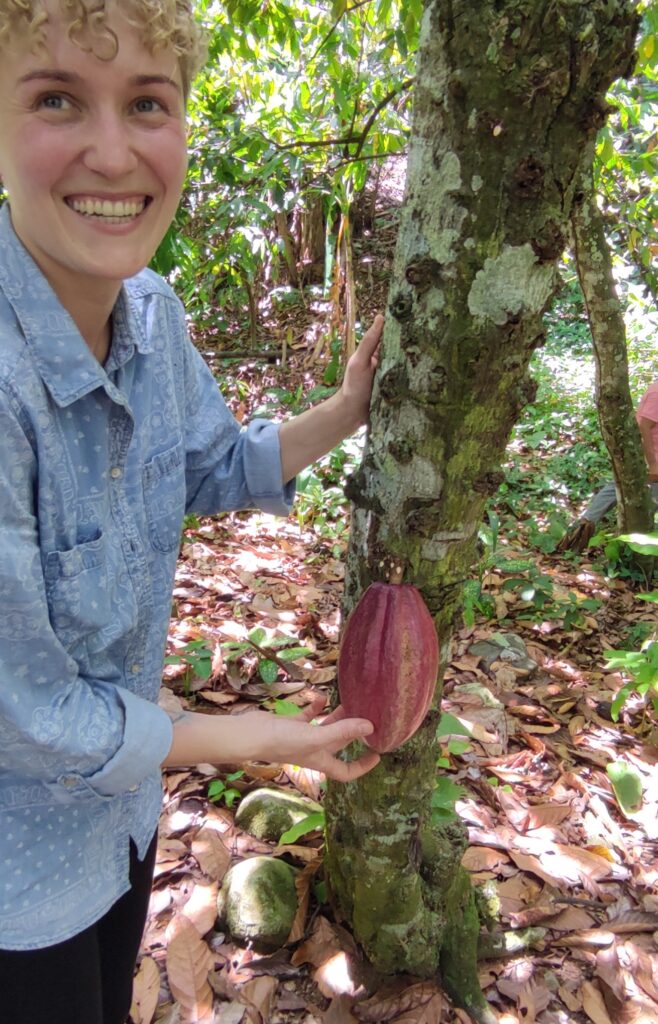
At Cacao Florencio Ortega in the Dominican Republic, we stepped into a living Cacao forest more than eighty years old. This was not a modern plantation designed for efficiency. There were no perfectly straight rows, no carefully managed canopies, and no low-hanging pods waiting to be picked.
Instead, there was Cacao as it has grown for generations—wild, resilient, and deeply connected to the landscape around it.
Here, harvesting is not simply agricultural work. It is a dialogue between people, trees, weather, and time.
The Moment of Ripeness
Every harvest begins with a question: is the pod ready?
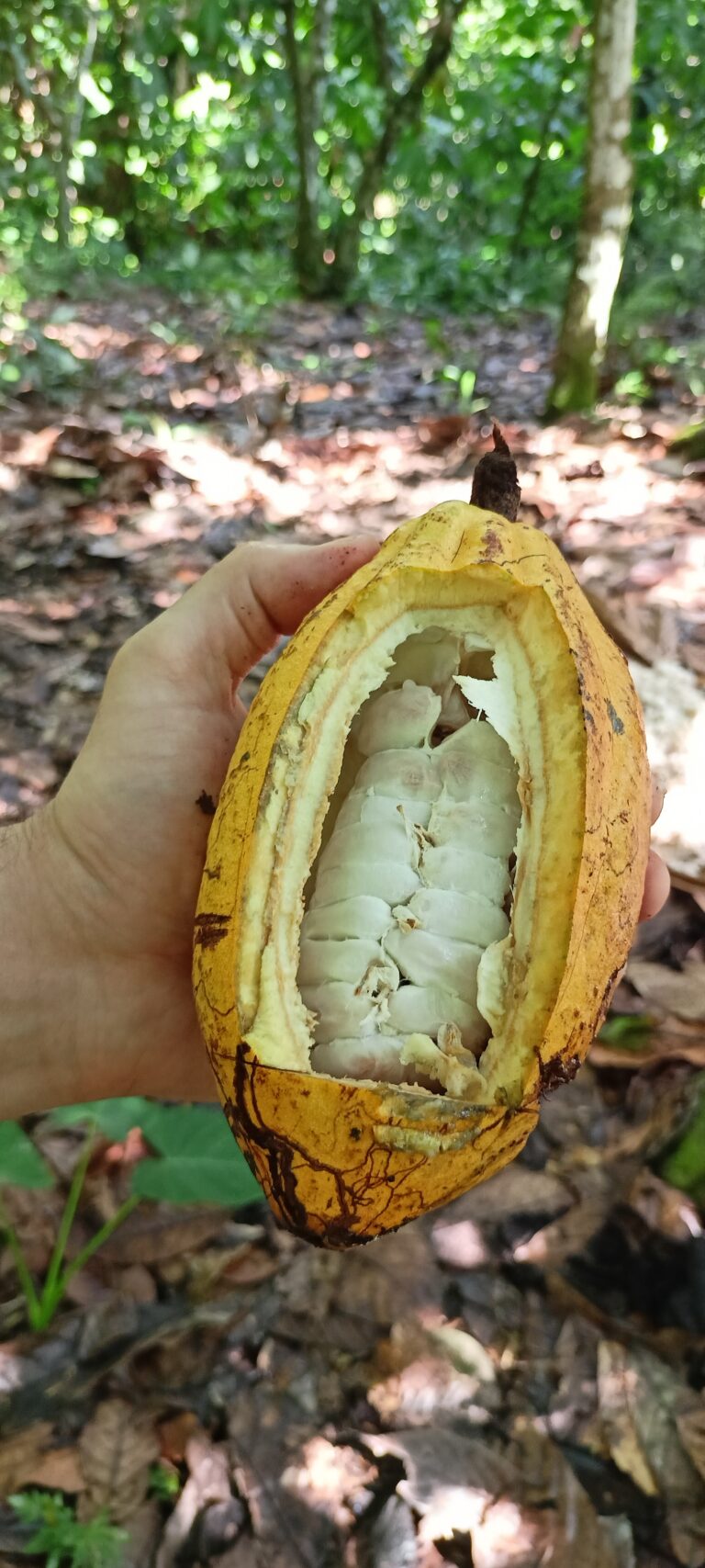
The answer lies beneath its thick outer skin. A small cut reveals the color within—green or yellow—and with that simple observation, a decision is made.
Because once a Cacao pod reaches maturity, it is no longer waiting just for the farmer.
Birds know exactly when the fruit is ready. Insects are drawn to its sweetness. The tropical environment wastes no time claiming what it can.
A ripe pod is an invitation, and nature is always listening.
Reaching for the Sky
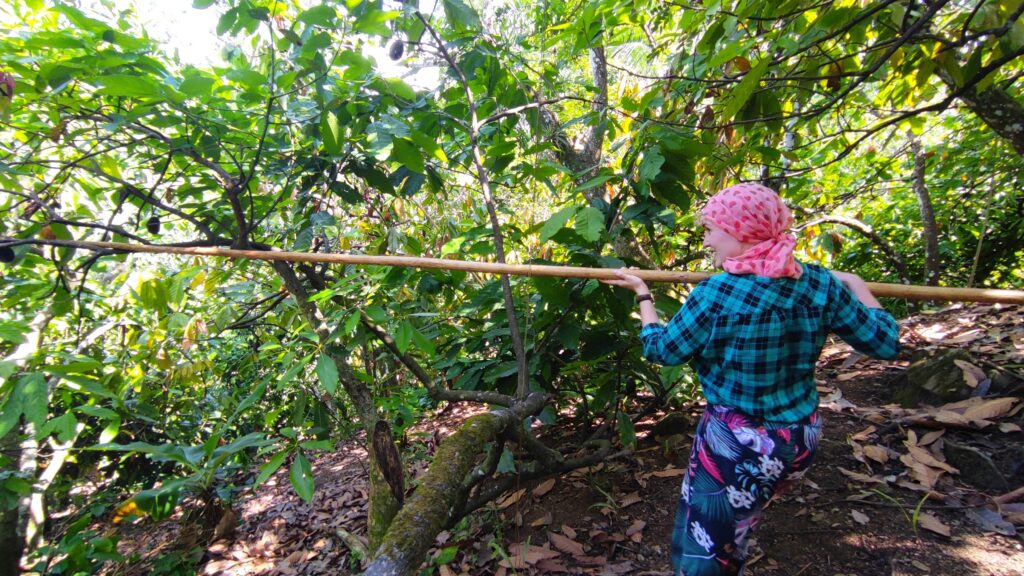
On older plantations, Cacao trees are allowed to grow as nature intended. Over decades, they stretch upward in search of light, creating towering canopies that transform harvesting into a physical craft.
The pods cannot be reached by hand.
Instead, harvesters use a long cutting tool mounted on a pole, known locally as a cosecha. From below, they study the branches, calculate the angle, raise the blade, and with a precise motion separate the pod from the tree.
Then they do it again.
And again.
Hour after hour.
The movement becomes almost rhythmic—lift, aim, cut, release.
Watching experienced workers move through the plantation is a reminder that true expertise often looks effortless, even when it is anything but.
When Gravity Takes Over
The moment a pod falls from the tree, gravity joins the harvest.
On the steep hillsides of the plantation, Cacao rarely lands where it is expected. Pods bounce, roll, disappear beneath leaves, and sometimes travel surprisingly far downhill.
Harvesting therefore becomes a two-part process.
First, the pods are brought down.
Then they must be found.
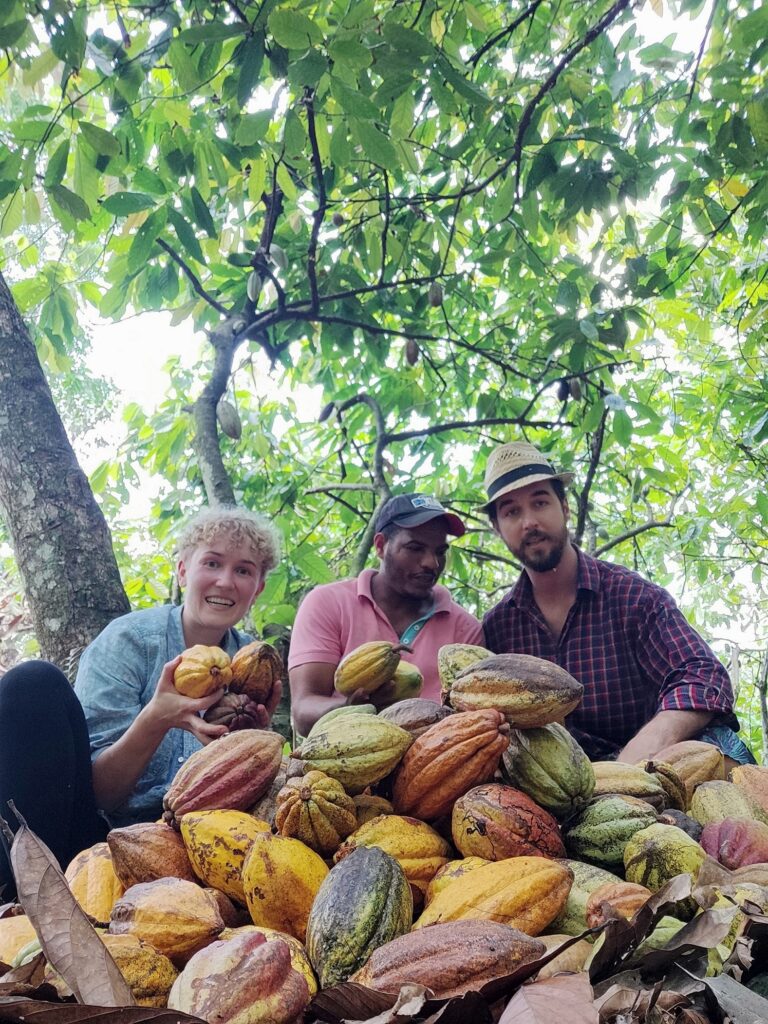
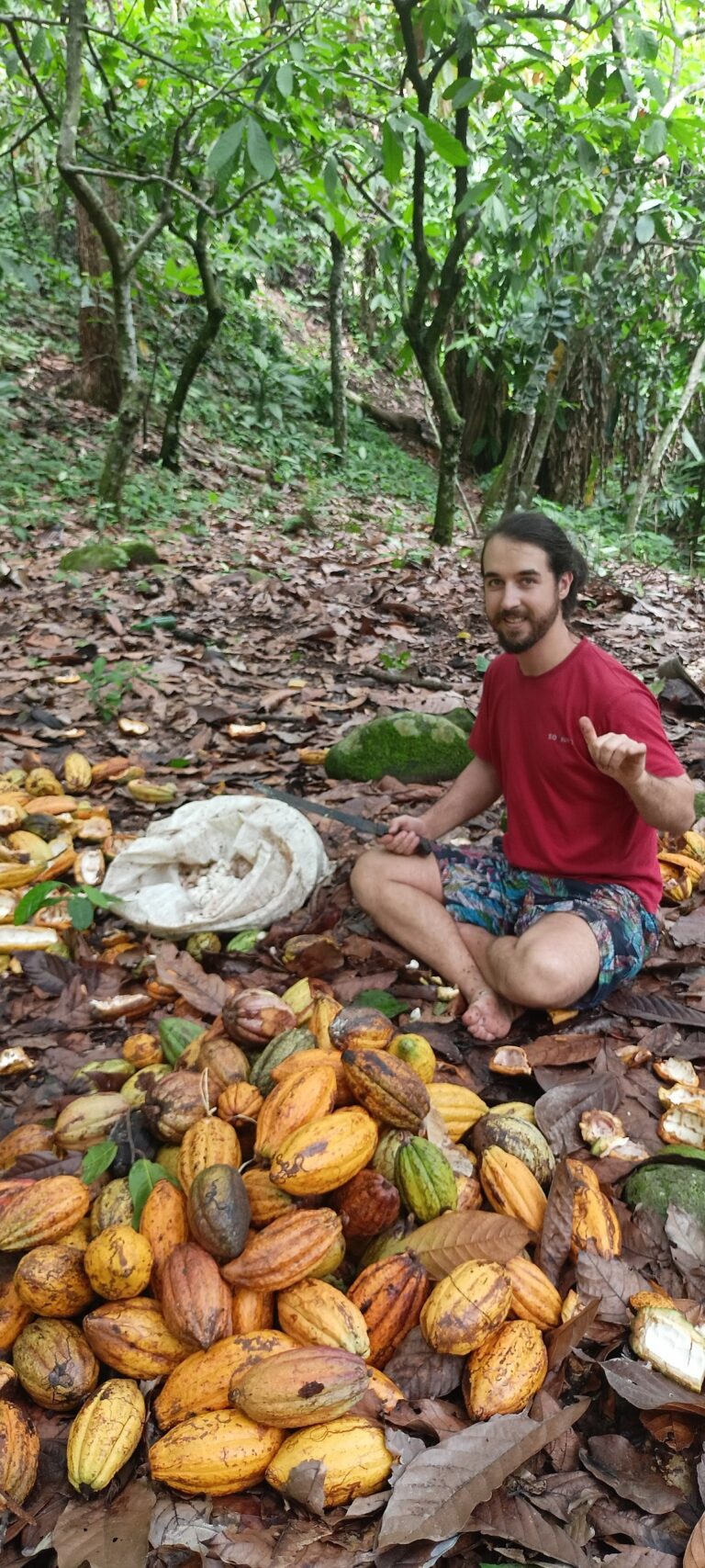
As we moved through the plantation, gathering pods into small piles, it became clear that every kilogram of Cacao represents far more labor than most people imagine when they unwrap a chocolate bar.
The Clock Starts Ticking
Once harvested, a Cacao pod begins a journey that cannot be paused.
Inside the fruit, biological processes are already preparing the beans for what comes next. Time becomes a critical factor.
Within two days, the pods must be opened and the beans removed.
Miss the window, and quality begins to suffer.
This is one of the hidden realities of Cacao production. While the final product may feel luxurious and timeless, the work behind it is governed by urgency. Harvesting schedules, weather conditions, transportation, and labor availability all suddenly matter.
The Cacao is ready when it is ready.
And it waits for no one.
Opening the Fruit
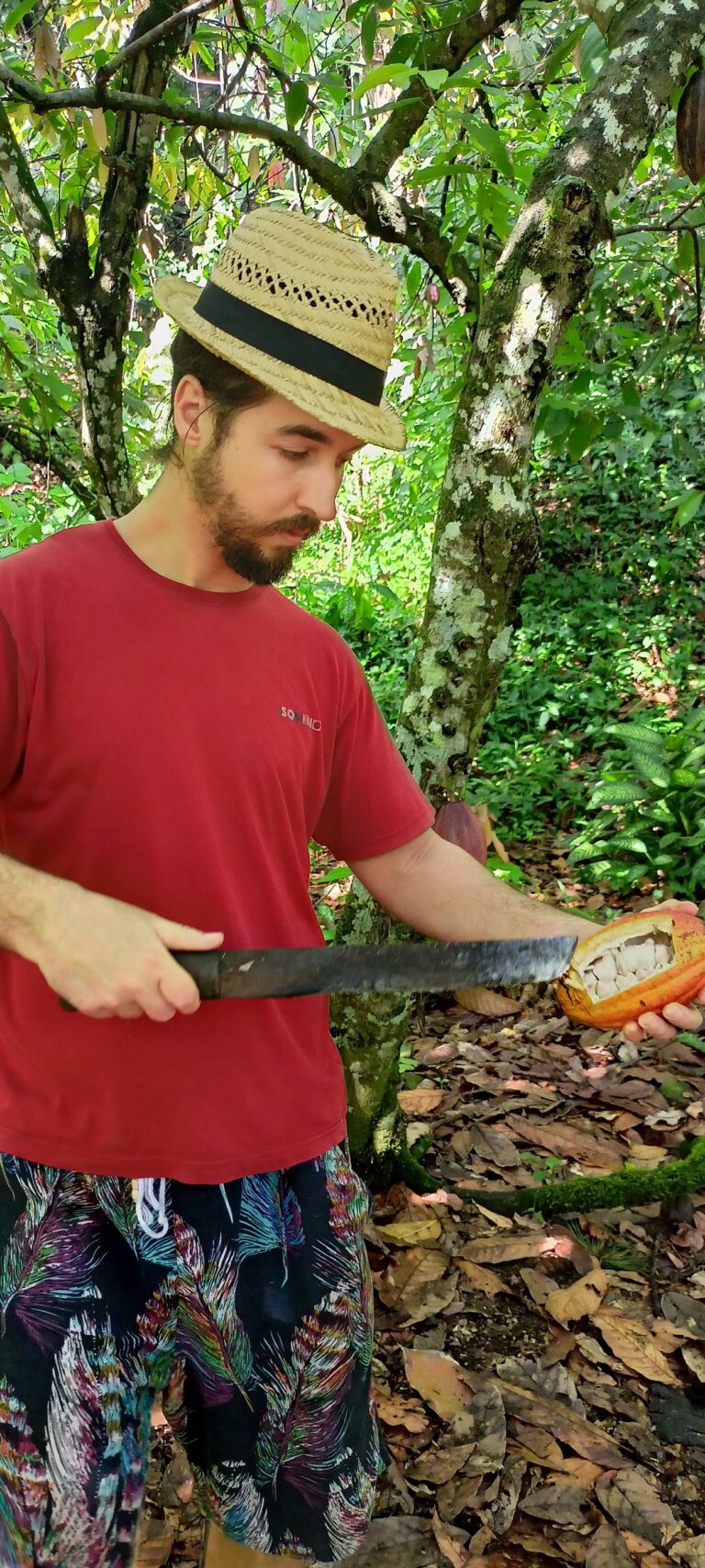
When enough pods have been gathered, the plantation fills with the sound of machetes striking thick shells.
Each pod is split open by hand.
Inside, the beans emerge wrapped in a glossy white pulp unlike anything most people expect to find inside a Cacao fruit. Sweet, fragrant, and tropical, it feels closer to fresh lychee or exotic fruit than to anything resembling chocolate.
The beans themselves grow around a central core known locally as corazón de Cacao—the heart of Cacao.
At first glance, it appears insignificant.
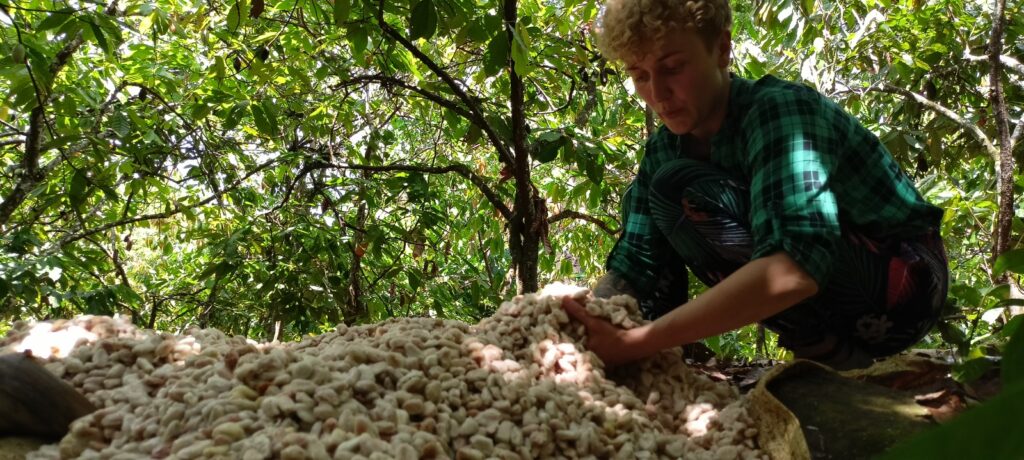
Yet every bean must be carefully separated from this central structure before fermentation. The process is entirely manual, requiring patience and attention to detail.
It is one of countless small steps that rarely appear in photographs but ultimately influence the quality of the final product.
All around us, insects gathered in the humid air, attracted by the aroma of fresh pulp.
Nothing in the Cacao forest remains unnoticed for long.
Carrying the Harvest Forward
Once cleaned, the beans are packed into sacks and prepared for transport.
Their destination is the fermentation center, where the next transformation will begin.
Getting there, however, is not always simple.
The terrain that gives these plantations their beauty also creates their challenges. Steep slopes separate the harvest site from the nearest road.
For some farmers, a mule provides an elegant solution. The sacks are loaded onto its back and slowly carried uphill through the landscape.
For others, the journey depends entirely on human strength.
The weight of Cacao is measured not only in kilograms but also in effort.
A Different Philosophy of Farming
Modern plantations often tell a different story.
Trees are carefully pruned to remain low and productive. Rows are organized for efficiency. Harvesting becomes faster, easier, and more predictable.
There is wisdom in that approach.
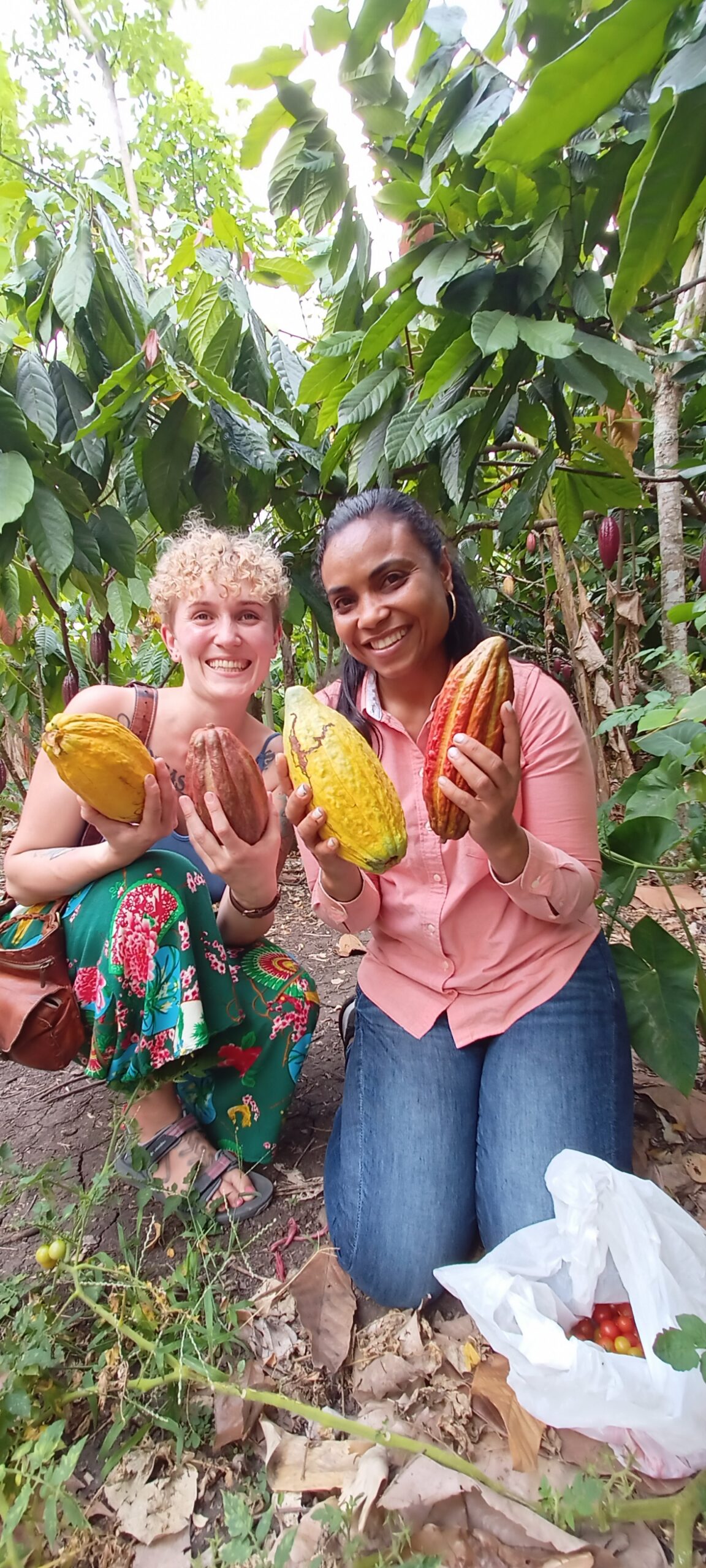
But standing among the towering trees of an eighty-year-old plantation offered a glimpse into another philosophy—one where productivity shares space with biodiversity, where the landscape shapes the work, and where Cacao still feels deeply rooted in the rhythms of the forest.
Neither approach is inherently right or wrong.
They simply tell different stories about our relationship with the land.
The Beauty of a Closed Circle
One particular lesson appears everywhere on a Cacao farm: nothing is wasted.
After the beans have been removed, the empty Cacao pods remain behind. Left on the forest floor, they gradually decompose and return nutrients to the soil that nourished the trees in the first place.
The cycle continues.
Even the corazón de Cacao finds a second life. Locally, it is transformed into Cacao wine—a delicate, refreshing drink that captures another side of the fruit rarely experienced outside Cacao-growing regions.
What appears to be waste becomes value.
Nature rarely operates any other way.
Cacao is far more than an ingredient.
It is a landscape. It is physical labor. It is knowledge passed between generations. And it is a process that begins long before fermentation, drying, or roasting ever take place.
In the next chapter, we’ll follow the beans beyond the plantation and into fermentation, drying, cleaning, and inspection—the stages where the foundations of flavor are carefully built.
Thank you, Yluminada, Joel, Jose, and all the people who welcomed us into their community and shared the art and hard work of Cacao farming.
If you are looking for exceptional Cacao beans or Cacao paste, please visit the Instagram profile of Cacao Florencio Ortega.